Mold Inspection and Testing in Wilmington, NC
Something smells musty. Or a dark patch showed up behind the bathroom vanity. Or the home you are about to buy sat empty all summer with the air off. Before anyone talks about removal, you need to know two things: what is actually growing, and what is feeding it. That is what an inspection is for. Testing is the lab work that sometimes goes with it, and the two get mixed up a lot, so let us separate them.
We are a referral service, not a contractor. We connect Wilmington homeowners with local mold specialists who inspect homes like yours every week. You tell us what you have noticed, and we match you with a specialist who covers your ZIP code.
Inspection and Testing Are Not the Same Thing
People use the words as if they were interchangeable. They are not. An inspection is a person in your home, looking. Testing is samples in a lab, analyzed. Most good outcomes start with the inspection, and plenty of inspections never need a single sample.
What an inspection covers
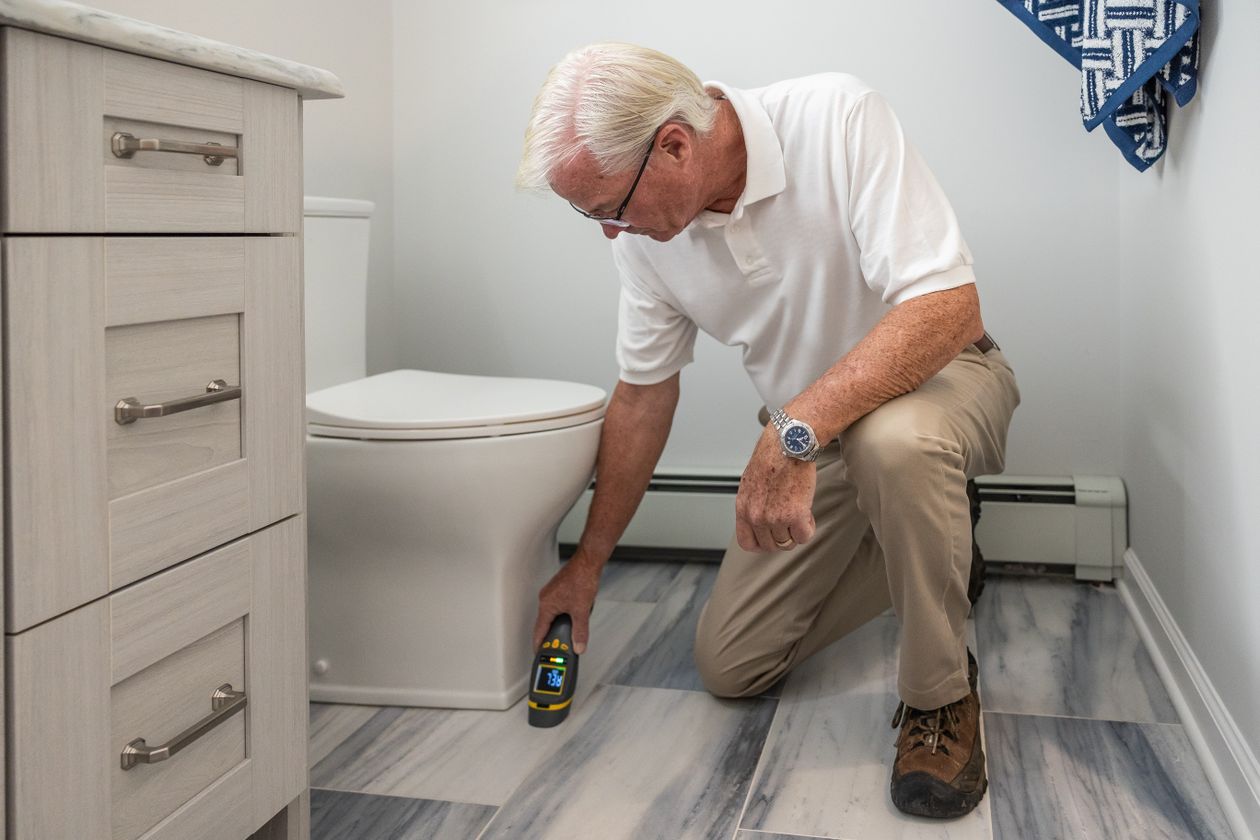
A proper inspection is a methodical look at the whole home, not a glance at the one spot you already found. The inspector checks bathrooms, kitchens and laundry areas, then the places mold hides: the crawl space, the attic, around the HVAC system and air handler, and behind appliances that use water. They take moisture readings in walls and flooring, because damp material is where growth starts and spreads. Just as important, they trace the water. A stain on a ceiling might come from a roof leak, a sweating duct or a slow plumbing drip, and each one points to a different fix. You get findings in plain language: where growth is, how far it reaches, what is feeding it, and what should happen next.
What testing adds
Testing answers questions eyes cannot. Air samples and surface samples go to a lab, which identifies the kinds of mold present and, for air samples, how indoor levels compare with a sample taken outside the home. That comparison is the useful part, because mold spores exist in all air, indoors and out. Testing earns its place when growth is suspected but nothing is visible, when you need the type identified, or when a written lab report matters for a home purchase, a landlord situation or an insurance file. After a cleanup, a follow-up test can confirm the work brought levels back in line with outdoor air.
Signs It Is Time to Book an Inspection
Some mold problems announce themselves. Others just leave hints. If any of these sound familiar, an inspection is the sensible next step rather than another round of guessing.
- Visible growth on walls, ceilings, grout or window frames
- A musty, earthy smell that comes back after cleaning and airing out
- A roof leak, plumbing leak or flood in the past year, even a small one
- Water stains, bubbling paint or soft, spongy drywall
- Coughing, congestion or itchy eyes that ease up when you leave the house
- Growth that keeps returning in the same spot after you scrub it
- You are buying or selling a home and mold came up in the process
- Condensation that never really dries in the crawl space or attic
One honest note on the health side. The EPA says mold exposure can irritate the eyes, skin, nose and throat, and people with mold allergies or asthma often feel it more. An inspection cannot diagnose anyone, though. If someone in your home is unwell, see a doctor about the person and an inspector about the house.
Air Sampling and Surface Sampling
When testing does happen, it usually takes one of two forms. Air sampling draws a measured volume of air through a cassette that traps spores, and the lab counts and identifies what landed. A good tester always takes an outdoor sample the same day as a control, because indoor results only mean something against that baseline. Surface sampling uses a swab or a tape lift on a visible patch, and it answers a narrower question: what exactly is this stuff growing here?
Each has its place. Air sampling suits the invisible problem, the smell with no visible source, because it can show elevated spores of types that like growing hidden inside walls. Surface sampling suits identification, when the growth is right there but you need to know what it is for a report or a dispute. A specialist who explains which sample they are taking and why is a good sign. Sampling everything in sight, with no reasoning behind it, is not.
What Lab Results Tell You, and What They Cannot
A lab report names the mold genera found and gives counts or percentages for each. Read well, it tells you whether indoor air looks like outdoor air with a few extra spores, or whether some type that favors indoor growth is dominating, which points to an active colony somewhere in the home. Paired with the inspection findings, that is enough to plan a cleanup with confidence.
Now the limits, because they matter. There are no federal standards that declare a spore count safe or unsafe, so no report can stamp your home passed or failed. A test is also a snapshot. Spore levels swing with the weather and the season, so a single calm result does not prove a hidden problem is absent, and a single high one does not prove disaster. Treat results as one piece of evidence alongside moisture readings and what the inspector actually saw. Anyone who sells you certainty from a lab sheet alone is overselling it.
Why the DIY Test Kits Usually Disappoint
The hardware store kit looks like a bargain: a petri dish you leave open, then mail away if something grows. Something almost always grows. That is the flaw. Every home, including a perfectly healthy one, has mold spores drifting through it, and a dish left out will culture some of them. The kit cannot tell you whether the growth came from a colony in your wall or from spores that floated in the window, and it says nothing at all about moisture, which is the thing you actually have to fix.
Plenty of kits also charge extra at the lab stage to tell you what grew, and the answer is a list of common molds with no interpretation and no plan. Homeowners tend to end up booking a real inspection anyway, a few weeks later and no wiser. If money is tight, skip the kit and put it toward the inspection instead.
What Happens After the Results
Sometimes the answer is a relief: a small patch, a simple moisture fix, a cleanup you can handle yourself. The EPA suggests homeowners can usually deal with areas under about ten square feet on hard surfaces. Sometimes the answer is a real job, and then you want to know what proper remediation looks like before anyone quotes you for it. Our guide to how the mold remediation process works walks through containment, removal, cleaning and drying step by step, so you can follow along when a specialist describes their plan.
If removal is needed, the path back is the homepage service: mold removal and remediation in Wilmington NC, matched to a local specialist through the same form below. And if you are wondering what all of this does to the price of a job, the honest answer is that inspection findings drive it. Our page on what affects the cost of mold removal lays out each factor, so a quote makes sense when you see one.
A last piece of local honesty. North Carolina does not license mold inspectors or remediators at the state level, and there is no federal certification either. NC State Extension confirms this. Serious specialists usually hold voluntary industry training, such as IICRC certification, and follow the IICRC S520 standard. Ask whoever you are matched with what training they hold. It is a normal question, and a good specialist answers it plainly.
Questions About Inspections and Testing
Do I need mold testing if I can already see the mold?
Often, no. The EPA's guidance is that if mold growth is visible, sampling is usually not necessary to know you have a problem worth fixing. An inspection still earns its keep in that situation, because the visible patch is rarely the whole story. The inspector checks how far the growth has spread, looks for hidden growth the patch hints at, and finds the moisture feeding it. Testing becomes more useful when growth is suspected but not visible, or when you need the type identified in writing.
How long does a mold inspection take?
Most inspections are a single visit, and the length depends on the size of the home and how much of it needs checking. A small condo with one bathroom patch is quick work. A larger home with a crawl space, an attic and a few suspect rooms takes longer, because the inspector is moving through all of it with moisture readings as they go. If samples are taken, the lab results come back afterward rather than on the day.
Will a mold test tell me if the mold in my home is dangerous?
Not in those terms. A lab report identifies the kinds of mold present and how the levels indoors compare with the air outside. It cannot declare a home safe or unsafe for a particular person, because reactions to mold vary a lot from one person to the next and there are no federal limits that set a pass or fail line for mold in indoor air. If someone in your home has health concerns, that is a conversation for a doctor. The test tells you what is growing and where, which is what you need to decide about cleanup.
Should I get a mold inspection before buying a home in Wilmington?
It is worth serious thought here. Plenty of Wilmington homes sit over crawl spaces, and a house that stood empty through a humid summer, or took water in a storm, can hide growth that a standard walkthrough misses. An inspection with moisture readings in the crawl space and attic gives you the real picture before you sign, or gives you documented findings to raise with the seller. Finding mold does not have to kill a purchase, but you want to find it before the house is yours.
What if testing comes back clear but I can still smell mold?
Trust the smell enough to keep looking. Air samples capture one moment in one spot, and hidden growth behind a wall, under flooring or inside ductwork may not shed much into the room air on the day of the test. A musty smell that survives cleaning usually means something is growing somewhere. That is where the inspection side matters more than the lab side: moisture readings and a careful look at the hidden spaces find what an air sample can miss.
Get Matched With a Wilmington Inspection Specialist
Tell us what you have seen or smelled, and where. We pass it to one local specialist who covers your ZIP code, and they contact you to arrange the visit. The form asks for your ZIP so we only match you with specialists who actually work in your part of Wilmington, and your phone number so the specialist can reach you.
Tell Us About the Mold Problem
Not Sure What Is Growing? Find Out First.
An inspection turns a worry into a set of facts: what it is, where it is, and what is feeding it.