Crawl Space Mold Removal in Wilmington, NC
The most common mold problem in a Wilmington home is one most owners never see, because it grows underneath the house. A vented crawl space in this climate is almost designed to grow mold. All summer, those foundation vents pull in warm coastal air loaded with moisture. Under the house, the floor joists and ductwork stay cooler than that air, so the moisture condenses on them, the same way water beads on a cold drink. Do that every day for a season and the wood stays damp long enough for mold to take hold.
Then the other water shows up. A hard rain or a passing storm leaves standing water under the house that takes days to drain. A plumbing joint drips quietly for months before anyone notices. Ground moisture rises straight out of the soil where the vapor barrier is thin, torn or missing. If your house has a musty smell you cannot track down, or an inspector or termite report has mentioned fungal growth under the floor, this page is about your problem.
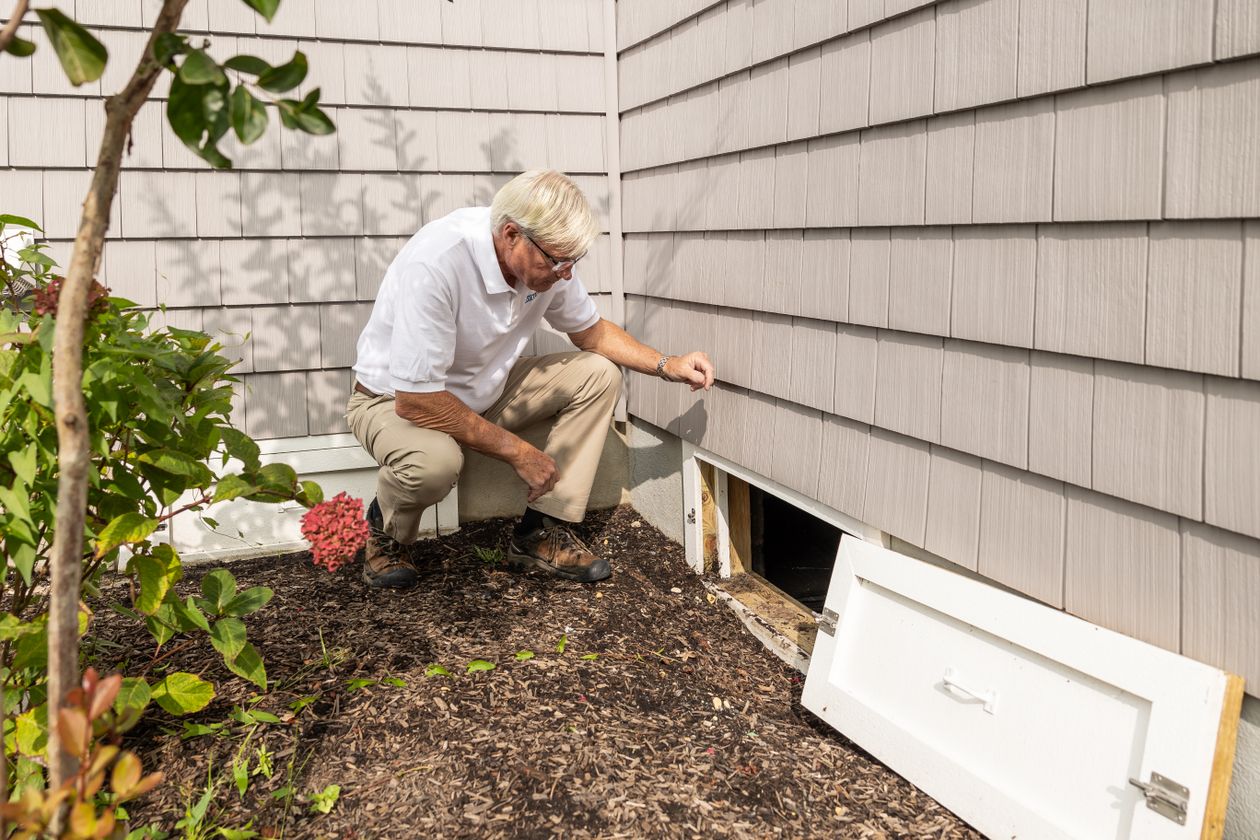
How a Crawl Space Grows Mold
It helps to think of the crawl space as a slow, steady exchange of air and water. Humid air comes in through the vents and any gap it can find. It meets wood and metal that are cooler than the air itself, and it gives up its moisture on those surfaces. The joists, the subfloor above them and the paper backing on insulation all absorb that water. Wood that stays damp day after day is food and shelter for mold at the same time.
Air conditioning ducts make it worse. Cold air runs through the ducts while hot, wet air surrounds them, so the outside of the ductwork sweats through the summer. Insulation batts pressed against the floor absorb moisture and hold it against the wood, and once they get heavy enough they sag and fall, leaving the floor uninsulated and the wood still damp. Add a low lot where storm water drains toward the house instead of away from it, which is common in the flatter parts of Wilmington, and you have standing water feeding the whole cycle from below.
None of this happens fast. That is the trap. A crawl space can grow mold for a year or more before the smell upstairs gives it away, and by then the growth is usually spread across a good share of the framing rather than sitting in one tidy patch.
Signs Your Crawl Space Has a Problem
Some of these you can spot from the access door with a flashlight. Others show up inside the house first.
- A musty smell inside the house, strongest near the floor
- Wood floors that feel spongy or have started to cup
- White, green or black patches on joists or the underside of the subfloor
- Insulation hanging down or fallen in sections
- Standing water or mud under the house after rain
- Rust on ductwork or water staining on the foundation piers
- Indoor air that feels clammy even with the air conditioning running
- A home inspection or termite report that mentions fungal growth
One sign on its own is not a diagnosis. A musty smell might be a damp crawl space, or it might be something else entirely. What settles it is a look under the house with a moisture meter in hand, which is exactly where a proper removal job starts.
What Crawl Space Mold Removal Actually Involves
The specialist goes under the house, maps where the growth is, and takes moisture readings from the wood. This separates active, damp growth from old dry staining, and it shows how far the problem has spread. You get a picture of the whole space, not just the corner by the door.
Before anything is scrubbed, the water sources get dealt with. That can mean fixing a plumbing drip, regrading soil that sends rain toward the foundation, clearing a blocked drainage path, or noting standing water that needs a drainage fix. Removing mold while water is still coming in is money spent twice.
The visible growth is physically removed from joists, beams and subfloor, using methods such as HEPA vacuuming, sanding or media blasting for heavier growth, followed by an antimicrobial treatment. Fallen or moldy insulation that cannot be cleaned comes out. The point is removal, not covering the growth up or just spraying something on it.
Wood has to come down to a moisture level where mold cannot keep growing. Depending on the house, that means drying equipment for a period, fixing sweating ducts, and checking readings again before anyone calls the job done.
With the space clean and dry, you talk about keeping it that way. Options range from a proper heavy ground cover that actually seals at the seams and piers, up to a fully sealed crawl space with a dehumidifier, which many Wilmington owners choose because vented spaces fight this climate all summer. Your specialist should lay out what your house needs and what is optional, in plain terms.
Keep gutters moving water away from the foundation, check under the house after major storms, and fix plumbing drips when they are small. A quick look through the access door twice a year catches most problems while they are still minor.
What Removal Cannot Do on Its Own
Here is the honest part. Scrubbing mold off the wood without fixing the moisture is a temporary result, and any specialist who tells you otherwise is not being straight with you. The growth will return, often within a season or two, because the conditions that grew it are unchanged. The EPA makes a related point about killing mold: even dead mold left in place can still bother people who are sensitive to it, so the standard approach is to remove the growth and fix the water problem, not just spray and hope.
Painting or coating over active growth has the same flaw. It hides the problem from view while the wood underneath stays wet. A sound job follows a simple order: stop the water, remove the growth, dry the wood, then keep it dry. If a quote skips the first step, ask why.
What a Crawl Space Job Depends On
What a crawl space job runs depends on how much of the framing is affected, how tight the space is to work in, and how much moisture work your house needs along with the removal. Our page on what affects the cost of mold removal walks through each of those factors in plain language, and an inspection of your crawl space is what turns them into a real figure for your home.
Questions About Crawl Space Mold
Can crawl space mold damage the structure of my house?
Given enough time and moisture, yes. Mold itself feeds on the wood, and the damp conditions that grow it also invite wood decay fungi, which do the heavier damage. Joists and subfloor that stay wet for years can soften and lose strength. Caught early, it is usually a cleaning and drying job. Left alone for a long time, it can turn into a wood replacement job, which is a very different conversation.
Will the mold come back after it is removed?
It can, and it will if the moisture problem is still there. Removal takes away the growth that is present now. Keeping it away depends on the water entry being fixed, the ground being covered, and the wood staying dry through a Wilmington summer. A specialist who only offers to scrub the wood and leave is selling you a temporary fix. Ask what the moisture plan is before you agree to anything.
Is the musty smell in my house coming from the crawl space?
Often, yes. A large share of the air in a home rises from below, through gaps around plumbing, wiring and ductwork. If the crawl space smells musty, that smell tends to travel up with the air, which is why it is frequently strongest near the floor and in rooms over the worst area under the house. It is not proof on its own, but it is one of the most reliable early hints.
How long does crawl space mold removal take?
It depends on the size of the crawl space, how much growth there is, and how much moisture work the job includes. A straightforward removal on a typical house is often a matter of days rather than weeks, with extra time where drying, drainage work or a new vapor barrier is part of the plan. An inspection gives you a realistic schedule for your house instead of a guess.
Can I clean crawl space mold myself?
A few small patches near the access door, possibly, with the right protective gear. Most crawl space jobs are a poor fit for DIY, though. The space is tight, the growth is usually more widespread than it looks from the door, and the moisture problem behind it still needs solving. There may also be electrical lines, plumbing and ductwork in the way. For anything beyond a small patch, a specialist is the safer call.
Not Sure What Is Growing Under Your House?
An inspection with moisture readings settles it. Tell us what you have noticed and we will match you with a local specialist who handles crawl spaces.